
Blood Test

Blood Test

Your Health Snapshot

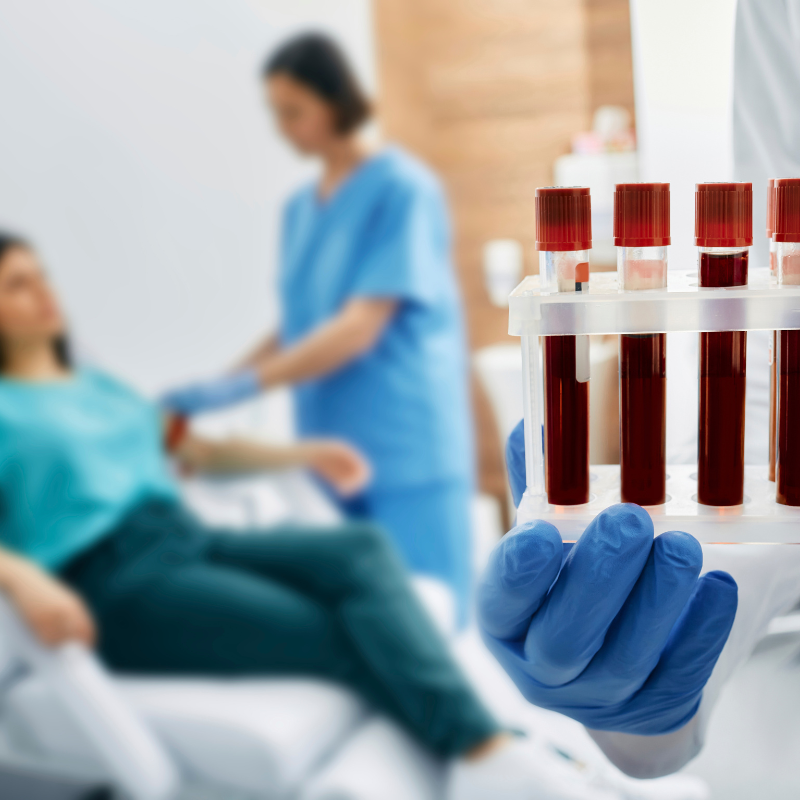
Blood tests provide a vital, detailed snapshot of your internal health, allowing doctors to detect potential issues early (like infections, deficiencies, or organ function problems), monitor existing conditions, and tailor precise preventative care.

We have a lot of blood tests for you.

Why Blood Tests Are Most Important

Blood tests are the most important diagnostic tool in medicine because they offer a vital, detailed snapshot of your internal physiology. They allow doctors to see crucial biological evidence necessary to detect issues early—such as infections, nutrient deficiencies, or organ function problems—often before symptoms even appear. By analyzing chemical levels and cell counts, blood tests track the efficacy of existing treatments and provide the necessary scientific data for doctors to make precise, customized decisions regarding medication, diet, and proactive health management, moving diagnosis far beyond guesswork.

Measures ALT, an enzyme found in the liver, used to assess liver damage or disease.
Alanine Transaminase (ALT) – Blood Test

£39.00
Measures albumin, a protein made by the liver, important for maintaining blood volume and transporting hormones and nutrients.
Albumin – Blood Test

£39.00
Allergy Explorer enables the rapid detection of up to 295 allergens from a single, low-volume sample (0.5 μl), offering a thorough and efficient analysis.
Alex 2 Profile Blood Test

£390.00
Measures ALP, an enzyme related to liver and bone health, useful for diagnosing bone or liver conditions.
Alkaline Phosphatase (ALP) – Blood Test

£39.00
Measures anti-Müllerian hormone (AMH) levels, used to assess ovarian reserve and fertility potential.
AMH – Blood Test

£75.00
Measures amylase levels, an enzyme that helps digest starch and carbohydrates, useful for diagnosing pancreatic disorders.
Amylase – Blood Test

£46.00
Measures apolipoprotein A, a protein involved in cholesterol transport, relevant to heart disease risk.
Apo A – Blood Test

£48.00
Measures apolipoprotein B, a protein involved in lipid metabolism, used to evaluate cardiovascular risk.
Apo B – Blood Test

£48.00
Measures AST, an enzyme found in the liver and heart, useful for detecting liver or muscle damage.
Aspartate Aminotransferase (AST) – Blood Test

£39.00
Measures total bilirubin, which helps assess liver function and identify jaundice or other liver conditions.
Bilirubin Total – Blood Test

£39.00
Measures the level of calcium in the blood, essential for bone health, muscle function, and nerve signaling.
Calcium – Blood Test

£55.00
Measures chloride levels in the blood, helping assess fluid balance and kidney function.
Chloride – Blood Test

£39.00
Protect those who matter most

Looking for a appointment?

Popular Questions

Frequently Asked Questions

Why is getting a blood test considered so important, even when I feel healthy?
Blood tests offer the most objective and detailed snapshot of your internal health. They are vital for early detection of potential issues like nutritional deficiencies, hormonal imbalances, infections, or markers for chronic diseases (like high cholesterol or pre-diabetes) before you experience noticeable symptoms.


Do I need to fast (not eat) before my blood test?
Preparation depends entirely on the specific tests ordered. For common tests like a lipid panel (cholesterol) or fasting glucose (blood sugar), you usually must fast for 8 to 12 hours (consuming only water). Always follow the specific instructions given by your doctor or our clinic staff to ensure your results are accurate.
How long does the actual blood collection take, and is it painful?
The entire collection process is very fast, usually taking less than 5 minutes. Our professional phlebotomists are highly trained to ensure minimal discomfort. You might feel a quick pinch or prick when the needle is inserted, but the feeling is brief.


How long will it take to get my results back?
The turnaround time varies based on the type of test. Routine screens may be available within 24 to 48 hours. Highly specialized tests may take longer. We will always inform you of the expected waiting period when your sample is taken.
What should I do once I receive my blood test results?
Your results are meant for clinical interpretation. You should always schedule a follow-up consultation with your requesting doctor or a specialist. They will explain what the values mean in the context of your overall health, history, and current symptoms, and recommend the appropriate next steps.
Select the fields to be shown. Others will be hidden. Drag and drop to rearrange the order.
  • Image
  • SKU
  • Rating
  • Price
  • Stock
  • Availability
  • Add to cart
  • Description
  • Content
  • Weight
  • Dimensions
  • Additional information
Click outside to hide the comparison bar
Compare